


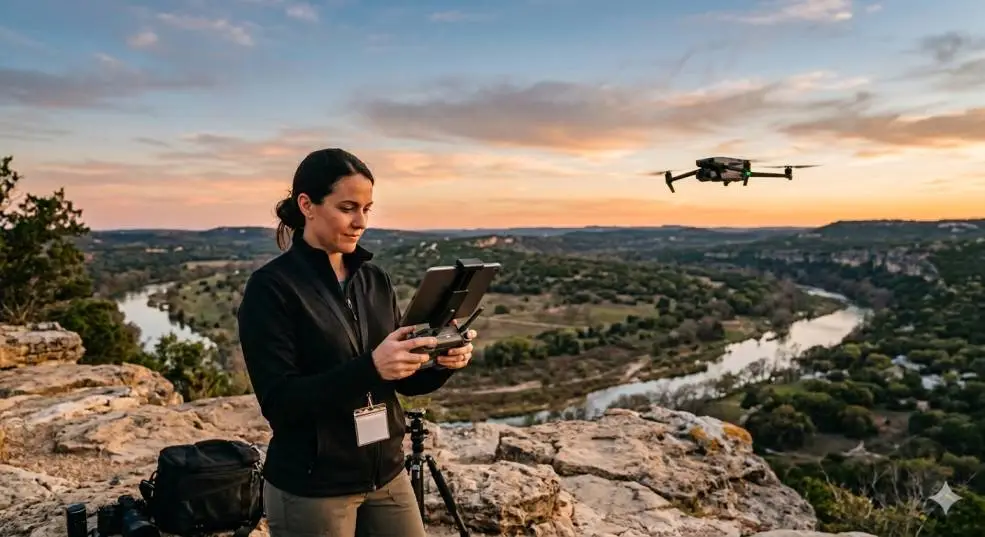
How to Start a Tourist Drone Photography Business in Texas?
If you want to know how to start a tourist drone photography business in Texas? Its scenes are fiercely assorted. You have the rolling slopes of the Slope Nation, the endless vacancy of West Texas.
The Piney Woods in the east, and over 350 miles of Gulf Coast shoreline. It’s a common play area, and in all honesty, it looks mind blowing from the air. I have went through endless hours with a controller in my hands, flying over these exceptionally scenes.
I have tried the equip, explored the precarious Texas warm, and learned the difficult way what works and what closes up as costly shelf ware.
So, How to Start a Tourist Drone Photography Business in Texas?
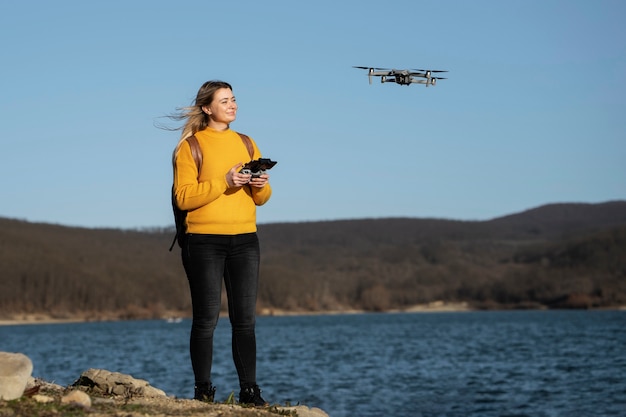
If you are looking to combine a cherish for travel, tech, and the Lone Star State into a trade, ag with Emma drone photography is a fantastic concept to investigate.
Read Also: How Comes DJi Avata 1 is More Expensive than 2?
But turning that thought into a maintainable commerce requires more than fair buying a ramble and heading to the closest state park. This direct is about helping you avoid the botches I made and the pitfalls I see new pilots drop into each day.
Let’s get into the down to earth, boots-on-the-ground counsel you really need.
The First Hurdle: It’s Not Just a Hobby (The Part 107)
Before we indeed conversation around cameras or clients, we have to address the lawful stuff. If you are arranging to make money—selling prints, charging for recordings, or getting paid for a shoot—you cannot fair fly beneath the recreational rules.
You require your FAA Portion 107 certification. I keep in mind considering for this exam. It is no joke. You require to get it airspace classifications, climate designs, perusing sectional charts, and crisis methods.
It costs cash to take the test, and you have to recharge it each two years. Here is the reality: Do not skip this. Flying without it is the speediest way to get fined and closed down.
Plus, when you approach a inn or a visit administrator in Texas to pitch your administrations, having your Portion 107 permit appears them you are a proficient, not fair somebody with a toy. It builds moment believe.
Finding the Best Drone for Photography (Without Breaking the Bank)
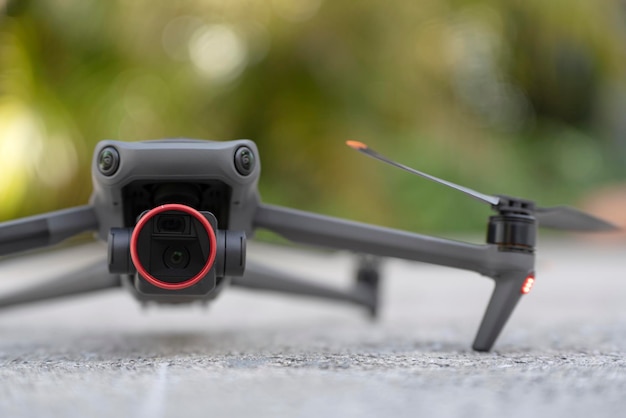
When you begin googling, you will see drones ranging from $300 to $16,000. So, what do you really require to begin a traveler photography commerce? Let’s cut through the noise.
I have flown most of the major models. Here is my legitimate take on what you should see for when looking for the best drone for photography in a traveler setting.
The "Sweet Spot": The DJI Mini Series
For 90% of beginners, this is where you should start. Specifically, look at the DJI Mini 4 Pro or the newer DJI Mini 5 Pro.
-
Why it works: It weighs under 250 grams. In many locations, this gets you around stricter registration rules. It is small, quiet, and doesn’t scare people.
-
Camera Quality: It shoots in 4K, has a decent sensor, and the stabilization is rock solid. I have used this to shoot real estate promos and travel content that looked professional enough to sell.
-
The Limitation: It’s small. In the famous Texas winds (especially near the coast or in open plains), it can struggle. I have had my Mini series drone fight against a 25 mph gust, and it wasn't fun. You have to be very weather-aware.
The Professional Step Up: DJI Air 3 or Mavic 3 Series
Once you have consistent income, or if you know you need better low-light performance and dual cameras (wide and zoom), this is the move.
-
Why it works: The larger battery gives you more flight time. The dual cameras are a lifesaver. You can get a wide shot of the entire San Antonio River Walk, and then zoom in on a specific architectural detail without moving the drone an inch.
-
The Limitation: It’s heavier, louder, and more expensive. It also requires FAA registration, which means displaying your registration number on the outside of the drone.
Buying Guidance: Do not fall for the "cheap drone" trap on Amazon. Those $80 drones have terrible cameras, no stabilization, and will break immediately. Stick to the major brands.
When you look up good drone for photography, the results will always point to DJI, Autel, or Potensic for a reason—reliability.
Finding Your Niche: Beyond Just "Tourist Photography"
If you type "drone photography near me" into Google, you will see a thousand results. To stand out, you cannot just be "the drone guy." You have to specialize. For a tourist business in Texas, here are three angles I have seen work well:
1. The Luxury Stay Angle
Texas has incredible resorts, glamping sites, and dude ranches. These places spend thousands on marketing.
-
The Pitch: Don't just offer photos. Offer to create a highlight reel for their social media. Show the pool from above, the layout of the cabins, and the vastness of the property.
-
Real Talk: I worked with a small ranch outside of Fredericksburg. The ground photos were nice, but the aerial shots sold the property. The agent told me that 3 out of 4 bookings that month mentioned the drone video.
2. The "Experience" Angle
Tourists don't just want a photo of the Alamo; they want a photo of them doing something cool.
-
Active Shots: Learn to track moving subjects. Follow a cyclist through the Hill Country. Film a group of friends kayaking on Lady Bird Lake.
-
360-Degree Views: Offer virtual tours of popular hiking spots like Enchanted Rock. "Can't get to the top? Let us show you what it looks like" is a powerful marketing tool.
3. The Construction/Real Estate Crossover
This might seem off-topic, but it pays the bills while you chase tourist work. Look up drone photography for construction.
-
The Work: Construction companies need weekly or monthly progress photos of new developments.
-
Why it matters: This is consistent, recurring revenue. It pays for your gas to drive to Big Bend. It buys that extra battery you need. It keeps your skills sharp so that when a tourist hires you, you are smooth and confident.
The Texas-Sized Challenges (Pros and Cons)
Let’s be honest about what you are getting into. The "Instagram vs. Reality" of this business is stark.
You Must Also Like: Black Falcon 4K Drone: Is Black Falcon Drone Legit?
The Pros
-
Unmatched Views: You get to see Texas in a way 99% of people never will.
-
High Demand: Content is king. Hotels, real estate agents, and event planners are desperate for high-quality video.
-
Scalability: You can start with just a $1,000 investment and grow from there.
The Cons
-
The Weather: Texas weather is brutal. In the summer, the heat radiating off the ground creates turbulence. Your drone battery will drain faster. Your phone screen (which you use as a monitor) will overheat and dim. I have lost shots because my iPad shut down from heat exposure.
-
Restricted Airspace: You cannot fly in National Parks. Period. You cannot fly near airports without authorization. A lot of the iconic spots (like the San Antonio Missions National Historical Park) are off-limits without specific waivers.
-
The "Creepy" Factor: People are wary of drones. If you fly low over a crowded beach in Galveston or South Padre, you will get confronted. You have to be respectful, fly high, and avoid hovering over sunbathers. Privacy is a huge trust issue .
Actionable Advice: How to Actually Get Into Drone Photography?
If you are serious about how to get into drone photography, specifically for the Texas tourist market, here is your 3-step roadmap:
Step 1: Master the Machine
Buy a mid-range drone (like the DJI Mini 4 Pro). Do not take it to a tourist spot first. Take it to an empty field.
-
Practice returning to home.
-
Practice in wind.
-
Learn to hand-catch it (landing in dirt kicks up dust that ruins the camera gimbal).
-
Crash it? Hopefully not, but buy the DJI Care Refresh insurance. It’s a business expense that saves your wallet .
Step 2: Build a "Fake" Portfolio
You need samples to show clients. Offer free shoots to friends getting married, to a local bed and breakfast, or to a small business. This builds your credibility. Create a simple website or Instagram and post your best 10 shots. Quality over quantity.
Step 3: Network Locally
Go to tourism board meetings. Introduce yourself to hotel concierges. Leave them a business card.
-
"Hi, I'm a local drone pilot specializing in aerial content of the area. If your guests want a souvenir video of their vacation, I'm available for hire."
Safety and Trust: The Fine Print
To be trustworthy, you have to be safe. Here is what I tell every new pilot:
-
Get Insurance: Public liability insurance is non-negotiable. If your $500 drone falls and hits a $50,000 car—or worse, a person—you are personally liable. Policies are affordable and cover you for millions.
-
Use the Apps: Download apps like OpenSky or Air Control. Before you fly anywhere, check if you are in restricted airspace. Don't rely on memory.
-
Respect the "10-Meter Rule": Never fly directly over people who aren't part of the crew. Keep a horizontal distance. It’s the law and it’s just common courtesy.
Final Verdict
Starting a tourist drone photography business in Texas is an energizing wander. The watchword ag with Emma drone photography speaks to a dream of capturing magnificence from over, but the reality is a trade of arrangement, legal compliance, and skill.
Don't surge out to buy the most costly good drone for photography. Purchase the one that fits your expertise level. Do not anticipate to make thousands overnight.
Expect to spend the to begin with few months learning the airspace around Dallas, the wind designs in the Panhandle, and the persistence required to alter hours of footage.
But when you get that idealize shot—the dusk over the Pecos Stream, the lights of downtown Houston twinkling at dusk—it is all worth it. Fly secure, fly keen, and welcome to the skies.